How to Find Rural Property in Northern Portugal for a Tourism Business?
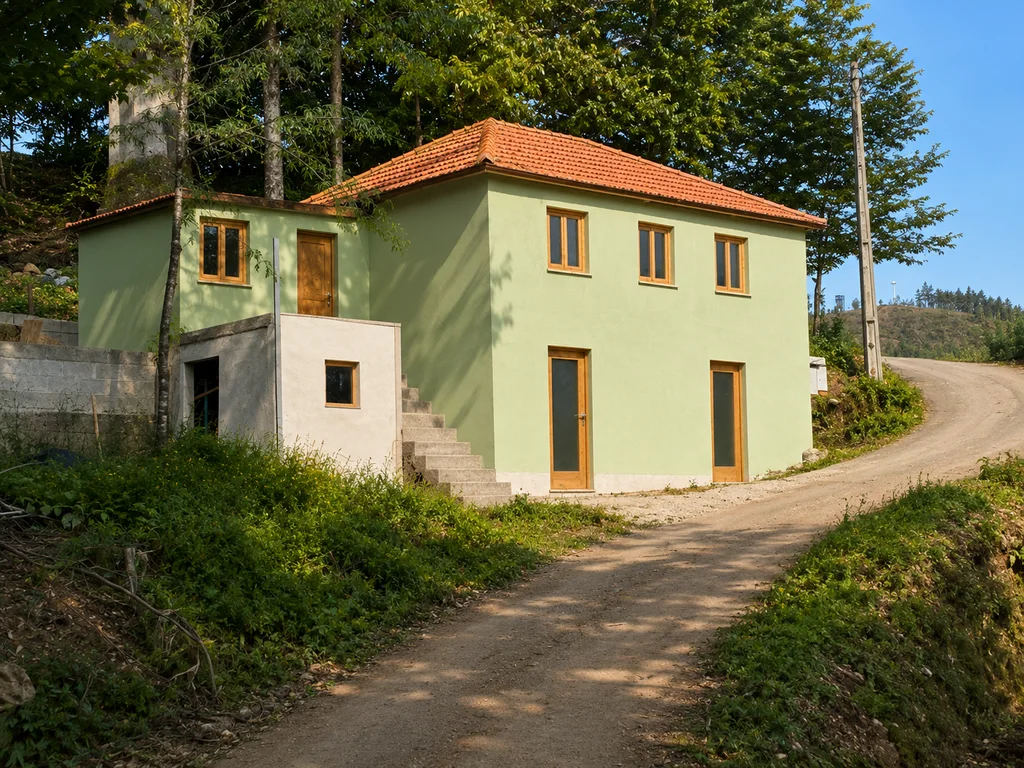
How to Find Rural Property in Northern Portugal for a Tourism Business?
Finding a beautiful rural property in Northern Portugal is relatively easy.
Finding one that can support a viable tourism business is much harder.
A stone house, a large plot of land or an extraordinary mountain view can immediately suggest a boutique hotel, retreat, glamping project or rural accommodation concept.
But the questions that matter most often begin after the photographs.
Can guests reach it comfortably?
Is there reliable water?
What can actually be built?
How much of the land is usable?
What happens during the winter?
How far is the nearest town?
What is the wildfire exposure?
And, perhaps most importantly:
Why would someone travel there and stay?
For anyone planning a tourism or hospitality project in Northern Portugal, the search should begin with the business concept rather than the property listing.
Start with the project, not the house
Before searching Idealista or contacting estate agents, define what you are trying to create.
A four-room boutique guesthouse needs a very different property from a retreat centre.
A retreat centre needs something different from six cabins.
A wine-focused rural stay may depend on agricultural context and producers nearby.
A luxury accommodation concept may need privacy, architecture and exceptional landscape while still being relatively easy to reach.
A glamping project may require much more usable land than expected once guest privacy, circulation, parking, technical infrastructure and shared spaces are considered.
The clearer the concept, the easier it becomes to reject unsuitable properties early.
Where should you search?
The major Portuguese property portals are a useful starting point. They are not the whole market.
Rural property in Northern Portugal is fragmented across different channels.
Useful sources can include:
- national property portals
- local estate agencies
- independent owners
- local property networks
- parish and municipal contacts
- rural and agricultural communities
- local associations
- properties identified directly
- word-of-mouth opportunities
Some properties never appear on the largest portals.
Others do appear online but are poorly described, incorrectly categorised or difficult for an international buyer to interpret without local knowledge.
This is one reason why searching locally can matter.
But there is an important caveat. Off-market does not mean cheap.
And it certainly does not mean problem-free.
A privately identified opportunity needs exactly the same legal and technical scrutiny as a property advertised by a large agency.
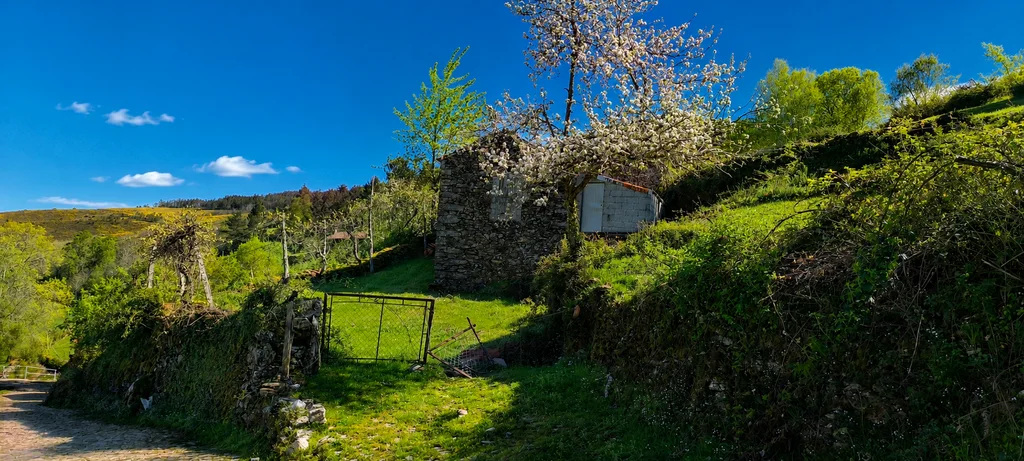
Choose the territory before choosing the property
Northern Portugal is not one uniform rural market.
The experience of developing a tourism project in Minho can be very different from doing so in Barroso or Trás-os-Montes.
Even neighbouring municipalities can have different landscapes, road access, tourism demand, climate and development patterns.
The first territorial question should therefore be:
What kind of destination does the project need?
A project relying on weekend guests from Porto may need relatively easy motorway access.
A retreat designed for international guests staying for a week may tolerate a longer transfer if the destination is exceptional.
A nature project may benefit from remoteness.
A restaurant-led hospitality concept may need a stronger surrounding food culture and access to suppliers.
A business expecting significant walk-in tourism will have different requirements again.
How important is access from Porto Airport?
For many international tourism concepts, very important.
Porto Airport is the principal international gateway for much of Northern Portugal.
But distance should not be judged only in kilometres.
Sixty kilometres on slower mountain roads can feel less convenient than a significantly longer motorway journey.
When assessing a property, consider:
- total transfer time
- final road quality
- winter conditions
- whether guests can arrive confidently after dark
- whether taxis and transfers are realistic
- distance to fuel, shops and healthcare
- how often staff and suppliers need to make the same journey
Accessibility is not simply a marketing issue.
It becomes part of daily operations.
Water can decide whether the project works
Water is one of the least glamorous questions in a property search and one of the most important.
A rural property may have mains water, a borehole, a well, a spring or some combination of sources.
Do not assume that because water exists today there is enough for the proposed hospitality operation.
Accommodation, kitchens, gardens, swimming pools, laundry and landscaping can significantly increase demand.
The availability, legality, reliability and capacity of the water supply should be understood before purchase.
This is especially important for projects that aim to operate throughout the year.
More land is not always more useful land
A listing may advertise five or ten hectares.
That number can be psychologically powerful.
But tourism projects operate on usable land, not headline hectares.
Land may be:
- very steep
- fragmented into separate registered plots
- difficult to access
- environmentally constrained
- agricultural
- heavily forested
- distant from existing utilities
- unsuitable for construction
A smaller property with good terrain, infrastructure and expansion logic can therefore be far more valuable to a tourism project than a huge but impractical estate.
Check the existing buildings carefully
Old stone houses and agricultural buildings are one of Northern Portugal's attractions.
They can also hide substantial costs.
A building that appears to need cosmetic renovation may require roofs, structural work, drainage, insulation, electrical systems, plumbing and complete internal reconstruction.
The legal status of buildings should also be confirmed.
Not every structure visible on a property corresponds neatly with registered construction or development rights.
Before basing a business plan on restoring or expanding a building, obtain professional technical and legal advice.
Planning comes before the dream
One of the biggest mistakes in rural tourism property searches is assuming that buying the land means being able to build the project.
It does not.
Glamping units, cabins, accommodation buildings, pools, communal facilities and other infrastructure may be subject to planning, environmental, tourism and municipal requirements.
Different classifications of land can significantly affect what is possible.
Before completing a purchase, the intended use should be discussed with qualified architects, engineers, legal advisers and, where appropriate, the municipality.
A beautiful property that cannot legally support the concept is not an opportunity.
Think about fire risk before summer
Northern Portugal includes very different vegetation and fire-risk environments.
Some areas have open agricultural landscapes.
Others have dense woodland or large areas of eucalyptus and pine.
The implications extend beyond the immediate safety of guests.
Vegetation management, access for emergency vehicles, insurance, landscaping and maintenance can all affect operating costs and risk.
The surrounding territory matters too.
A well-managed property can still sit within a more exposed landscape.
Fire risk should therefore be part of site evaluation from the beginning, not something considered after purchase.
Seasonality changes from one place to another
Portugal may be associated internationally with mild weather, but the interior North has real seasons.
Mountain and inland areas can experience cold winters and hot summers.
That is not necessarily a disadvantage.
Seasonality can itself become part of the product: fireplaces, autumn food, winter retreats, spring walking and summer river experiences.
But the business model must recognise it.
Ask:
- Can the property operate comfortably in winter?
- Will heating costs be significant?
- Is the access reliable?
- Does the concept depend almost entirely on summer demand?
- What would bring guests here in November?
A property can be beautiful in August and commercially weak for much of the rest of the year.
Understand the tourism around you
Existing tourism infrastructure can be both an advantage and a limitation.
Restaurants, activity providers, wineries, hiking routes, thermal spas, cultural sites and established accommodation help create a destination.
But a project does not necessarily need to sit inside an already famous tourism area.
Some successful rural concepts create a reason to visit rather than relying on existing visitor flows.
The more remote the location, however, the stronger that reason normally needs to be.
This leads to one of the most important questions in the entire search:
Can this property become a destination of its own?
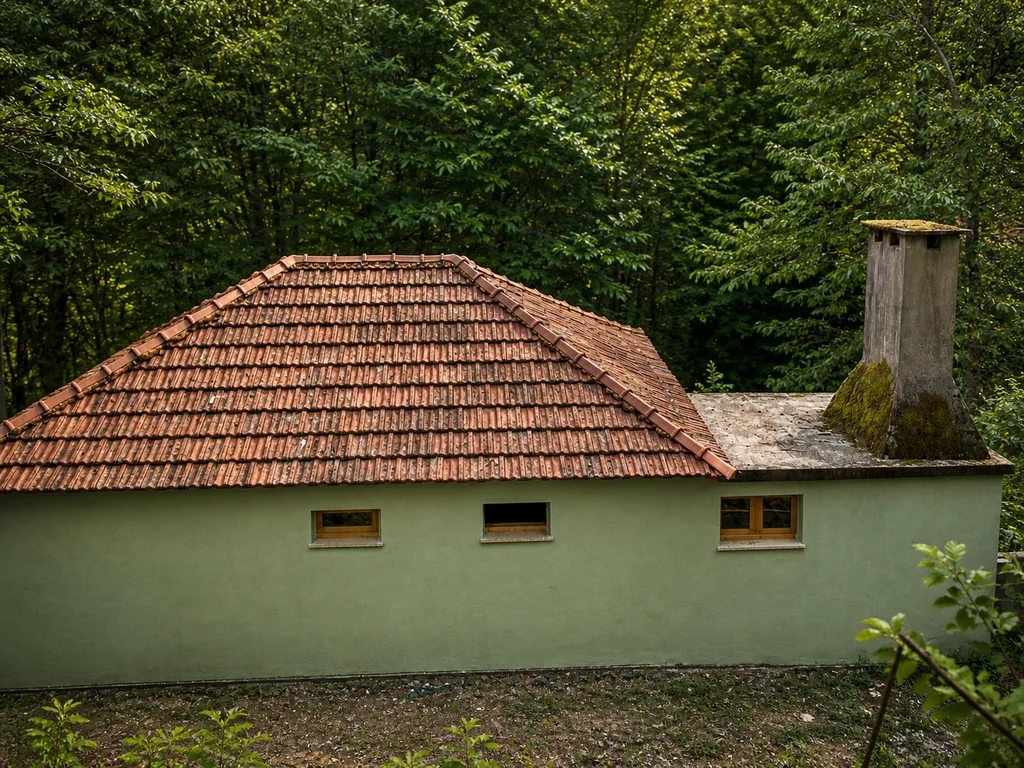
Cheap property can be very expensive
A €50,000 rural property can look dramatically better value than a €200,000 property.
It may not be.
Imagine that the cheaper property then requires:
- major structural rehabilitation
- a new access road
- electricity upgrades
- water storage
- sewage infrastructure
- extensive land clearing
- professional planning work
- retaining structures
- landscaping
- several years of licensing uncertainty
The initial saving disappears rapidly.
Purchase price should therefore be considered alongside the total cost of creating an operational project.
Sometimes paying more for the correct property is significantly cheaper than trying to force the wrong property to work.
Different Northern Portugal regions create different opportunities
These areas combine mountains, rivers and rural landscapes with relatively practical access from Porto.
They can make sense for nature-based accommodation, retreats and active tourism projects.
Property-by-property assessment remains important because terrain and surrounding vegetation vary significantly.
Barroso is more remote and has a very distinctive mountain identity.
Its traditional villages, agricultural landscape and strong relationship with the land can support projects built around nature, food, culture and a genuine sense of place.
The remoteness needs to be part of the concept rather than something the business tries to hide.
Chaves offers an interesting balance between rural territory and an established regional town.
Its thermal heritage, historic centre and services can support projects that want countryside without complete isolation.
Valpaços and the broader Trás-os-Montes territory offer vineyards, olive groves, rivers, agricultural landscapes and large areas of lower-density countryside.
The distance from Porto can be greater, so hospitality projects need a clear destination proposition.
Northern Properties' existing location guides already emphasise that rural property evaluation should include access, services, water, planning constraints and the practical realities of living or operating there.
The property search should eliminate opportunities, not accumulate them
International buyers can easily receive dozens of links.
That rarely improves the decision.
A better search progressively removes properties that do not fit the project.
- Wrong location.
- Wrong access.
- Insufficient usable land.
- Too much infrastructure required.
- Unsuitable tourism context.
- Poor relationship between price and total project cost.
The goal is not to build the longest shortlist.
It is to arrive at a small number of properties that genuinely deserve closer investigation.
There is no perfect property
Every rural project involves compromises.
Better access may mean less isolation.
More remote landscapes can mean more difficult operations.
A historic building may have extraordinary character and expensive rehabilitation.
Large landholdings may offer privacy but also significant maintenance.
The important question is therefore not whether a property has disadvantages.
It is whether those disadvantages are compatible with the project.
Search for a place that can support the business you actually want
A rural hospitality project begins with an idea.
But eventually that idea has to function in a real territory, on a real property, with real guests and real operating costs.
That is why Northern Properties approaches tourism-property search from both directions.
We look at the building and land.
But we also look at the roads, landscape, water, towns, tourism context, seasonality and the experience a future guest might have.
Because when the objective is to create a tourism business, you are not simply buying property.
You are choosing the place where the business has to make sense.
[Find Property in Northern Portugal for a Tourism or Hospitality Project →]